
Investing activities section of statement of cash flows

investing activities

Leasing allows you to pay for property and equipment in smaler payments Cash Flow Management for Small Businesses rather than with a lump sum. Another way to boost your cash flow is to ask for payments immediately rather than waiting to send out your invoices. Thus, for the year 2023, Hershey’s recorded a net cash flow from investing activities of -$1,198,676 thousand.

  • Earlier, we discussed how the cash from operating activities can use either the direct or indirect method.
  • It also encompasses loans made to third parties and the collection of loans made by the entity.
  • The cash flow statement provides a lot of useful information on how a company use cash or available capital in its business operations.
  • However, when these debt investors are paid back, then the repayment is a cash outflow.
  • As shown in Vincent’s example, companies with negative cash flow from investing generally mean they’re in a growth state.
  • Students need to remember that interest paid on loans or borrowings is not a financing activity under generally accepted accounting principles (GAAPs).

Items to be Excluded When Calculating Cash Flow from Investing Activities
investing activities

Typically, companies with significant capital expenditures are in a state of growth. Investment may generate income or ensure the long-term health or performance of the company. The net cash flows from operating activities can be determined using either the direct or indirect method. While companies are mostly allowed to choose any of these two methods worldwide, major accounting frameworks, like GAAPs and IFRSs, suggest the use of the direct method. These insights are indispensable for evaluating a company’s liquidity and financial agility. At the bottom of the cash flow statement, the three sections are summed to total a $3.5 billion investing activities increase in cash and cash equivalents over the course of the reporting period.

investing activities

Let Skynova Help You Manage Your Small Business Financing Activities
investing activities

Investments in highly liquid securities (cash equivalents) are excluded retained earnings balance sheet from investing activities. Therefore, buying and selling activities of cash equivalents that are highly liquid and securities for trading purposes are not part of investment activities. In the financial statement, investing activities are one of three categories in the cash flow statement. As we have discussed, the operating section of the statement of cash flows can be shown using either the direct method or the indirect method.
investing activities

Cash Flow Statements: How to Prepare and Read One

  • These activities are reported in the cash flow statement, specifically in the section dedicated to cash flows from investing activities.
  • Moreover, poor investment decisions can result in underperformance or loss, which can adversely affect the company’s financial health and investor confidence.
  • For example, suppose a company receives an interest payment from a third-party partner to whom the company has loaned money.
  • The distinction matters because investing activities showcase a company’s future growth potential, while operating activities reveal its current performance.
  • If you’re a business owner or entrepreneur, it can help you understand business performance and adjust key initiatives or strategies.

While the direct method is easier to understand, it’s more time-consuming because it requires accounting for every transaction that took place during the reporting period. Most companies prefer the indirect method because it’s faster and closely linked to the balance sheet. However, both methods are accepted by Generally Accepted Accounting Principles (GAAP) and International Financial Reporting Standards (IFRS). In a nutshell, investing activities refers to how the company may have received or used cash to acquire non-current assets intended to generate profits in the future. A negative cash flow resulting from investments in long-term assets is actually a positive thing as the company is using its cash to plan for the future and generate more revenues.

A few examples of fixed asset purchases would include a company acquiring another business, a new fleet of vehicles, or even the land on which future properties might be built. When a medium other than cash is used to acquire an asset, we call it a non-cash investing activity. When we prepare a statement of cash flows, we are concerned only with cash transactions. The significant non-cash investing activities are, however, disclosed in the footnotes under the caption “non-cash investing and financing activities”.

  • Access your interactive balance sheet, income statement, and cash flow statement templates today.
  • We also allow you to split your payment across 2 separate credit card transactions or send a payment link email to another person on your behalf.
  • The company allocated 771,109 thousand dollars towards capital expenditures, reflecting its commitment to expanding infrastructure and enhancing technological capabilities.
  • Vincent needs to buy more equipment but also figures that much of his existing equipment is outdated and could do with being replaced.
  • Each time you take out cash to pay your $1,000 installment, that amount would be recorded under the investing section of your cash flow statement, observing a negative cash flow.
  • Maybe we lend money to another company (cash outflow) or collect money on a loan we previously gave (cash inflow).

What Is a Contra Account? Types + Examples

For example, after six years, the asset’s book value on the balance sheet will be $40,000. However, it will also have a negative accumulated depreciation of $60,000, offsetting that cost. After each accounting period, the company records a depreciation expense of the asset.

Diving into Different Types of Contra Accounts

Companies rely on accountants and financial controllers to manage contra accounts. These professionals ensure that records accurately reflect a business’s financial health. Similarly, allowance for receivables will pair with accounts receivable balances. These balances cannot offset asset accounts that do not relate to them.

Contra equity accounts, those intriguing components in the equity section of the balance sheet, reflect transactions that reduce the total equity available to shareholders. The most common one you might encounter is treasury stock—where companies buy back their own shares. It’s essentially a reverse investment; instead of pouring money in, the company is taking it back, reflecting a decrease in shareholders’ equity. This can have various strategic implications, from attempting to increase per-share earnings to trying to prevent takeovers.

  • A contra liability account is not classified as a liability, since it does not represent a future obligation.
  • Accurate contra account use also smoothes out budget forecasting and financial planning, as businesses are not caught off-guard by suddenly realized losses or overstated assets.
  • It’s essentially a reverse investment; instead of pouring money in, the company is taking it back, reflecting a decrease in shareholders’ equity.
  • They ensure that the assets, revenues, and equity reported are not overstated, and that liabilities are presented in relation to any discounts or premiums.

What is a Contra Account?

Usually, companies add to the accumulated depreciation account after every accounting period. In essence, contra-asset accounts have a negative balance while other asset accounts have a positive balance. Both of these accounts offset each other to represent a net balance on a company’s balance sheet. These accounts also help businesses track the gradual reduction in value of their assets, whether through depreciation, amortization, or other means. This transparency is essential for investors, creditors, and anyone else evaluating the company’s financial health. To offset this, the allowance for doubtful accounts balance is adjusted via a credit, while the bad debt account is debited to balance out the AR account.

Contra asset accounts help ensure financial statements are accurate and not overly optimistic. For example, without an allowance for doubtful accounts, a business might show a high accounts receivable balance even if it knows some customers won’t pay. The contra asset account Accumulated Depreciation is deducted from the related Capital Assets to present the net balance on the parent account in a company’s balance sheet.

Allowance for Doubtful Accounts

However, these vehicles have experienced significant wear and tear in the intervening years. And currently, Show-Fleur anticipates that it could only sell each one for roughly $50 thousand, meaning the depreciation per vehicle is $100 thousand. Notes receivables are promissory notes that include a promise from a borrower to repay a lender. Companies that hold inventories for a long time may face accumulating obsolete inventory. This process calculates the decline in value of the natural resource and offsets it against the initial appraisal of the land where the resource is being extracted from.

Why Are Contra Accounts Important?

Other than the above contra-asset accounts, we often see contra-revenue accounts for any sales returns or sales rebates. Therefore, to ensure accounts receivable stays clean and transparent, CCC will record $2,500 in the contra asset account called “Allowance for Doubtful Accounts”. This will ensure the net value of accounts receivable at year-end is not overstated. The contra accounts will be grouped in the same category on the balance sheet or income statement as their related accounts. Generally speaking, the use of contra accounts is to ensure their related accounts stay clean and to keep track of historical cost easier. Nor would it count as a liability as it does not reflect a future obligation.

What is a Contra Asset Account?

For stakeholders, looking at both accounts is also crucial in their decision-making process. The points below explain the importance of contra asset account passing a contra account entry. This approach ensures your financial statements don’t overstate your expected cash inflow. For example, if you have $50,000 in accounts receivable and you estimate that $2,000 won’t be paid, the allowance for doubtful accounts would show -$2,000. When the two balances are offset against each other they show the net balance of both accounts.

  • Contra asset accounts help ensure financial statements are accurate and not overly optimistic.
  • Automating key accounting tasks can help businesses track financial adjustments more effectively.
  • However, an accountant or person in charge must ensure that any change in the value of the assets due to revaluation or impairment must be considered.

Step 1: Identify the contra account type

The two most common examples of contra asset accounts are the accumulated depreciation contra account, and the allowance for doubtful debts contra account. A contra revenue account offsets a revenue account, which typically has a credit balance. Contra revenue accounts carry a debit balance and reflect reductions in gross revenue.

Similarly, if the parent account lists entries as debits, the contra account will appear as a credit. Contra asset accounts also provide a clear picture of the companies’ accumulation of assets. Similarly, these accounts can also be essential in various calculations.

You record the decline in value in a contra-asset account instead of changing the original asset value. This shows how much the fixed asset has depreciated while keeping your balance sheet accurate. A contra revenue account reduces your total revenue on financial statements. Instead of recording deductions as expenses, you track them separately to keep your sales figures accurate.

When a customer takes advantage of early payment discounts, you also adjust revenue to reflect the actual amount received. Equity recorded as a debit balance is used to decrease the balance of a standard equity account. It is a reduction from equity because it represents the amount paid by a corporation to buy back its stock. The contra account accounting reduces the total number of outstanding shares. The treasury stock account is debited when a company buys back its shares from the open market. By providing a clear and transparent mechanism to account for adjustments, these accounts enable stakeholders, including investors and creditors, to better understand a company’s financial health.

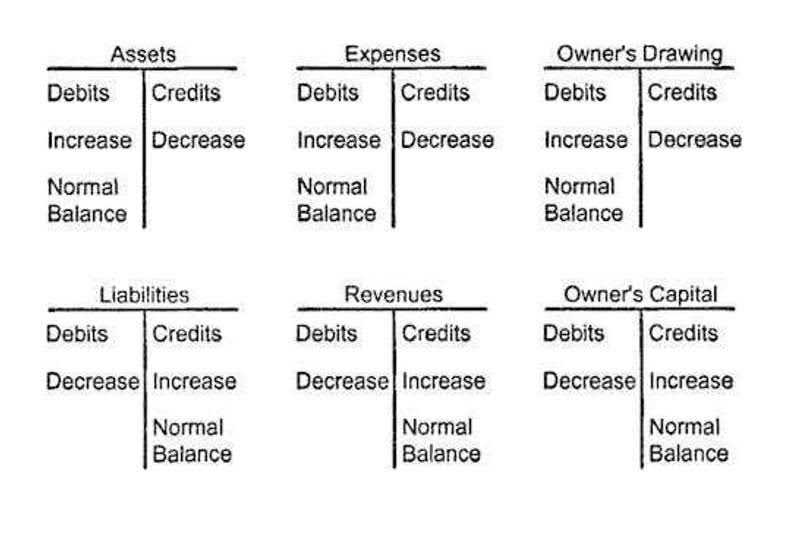
For instance, to increase asset and expense accounts, we simply record a debit and to decrease those accounts, we can record a credit. Each account in a general ledger will be designated debit or credit accounts depending on whether they’re categorized as assets, liabilities, revenues or expenses. Let’s break down what a contra account is, explain its purpose, and explore its types and examples to help you better understand its role in financial statements. After making the journal entry, update your general ledger to reflect the transaction. Contra accounts are listed in the same section as the related account but recorded separately. A contra account carries a balance that is opposite to the normal balance of its related main account.

Bookkeeping vs Accounting: What’s the Difference and Which One Does Your Business Need?

difference between bookkeeping and accounting

Accountants rely on financial statements from bookkeepers to do their work, but they also look for larger trends and the way money works across the business. Bookkeeping involves identifying, measuring, and recording financial transactions. Working with an accountant or bookkeeper doesn’t mean losing control of your business. The best bookkeepers and accountants work with you, giving you visibility into your finances and helping you get a better understanding of your company. Instead, an accounting firm may hire an in-house bookkeeping team or partner with their client’s bookkeeper to provide business owners with the expertise and financial support they need. In the U.S., certified public accountants (CPAs) are accountants who have specific training and education and pass a rigorous exam on business and accounting concepts and regulations.

Continuous Learning and Professional Development

difference between bookkeeping and accounting

Recorded financial transactions in the bookkeeping process follow the principles of the double-entry system, a cornerstone of this precise art. Identifying the essential skills of bookkeeping and Law Firm Accounts Receivable Management accounting professionals is vital for business owners. These skills contribute significantly to the proper financial management of any business, regardless of its size. Choosing the right bookkeeping software and accounting software can streamline your financial processes and improve accuracy.

  • Accountants prepare financial statements that help owners, managers, and even governments understand how well a business is doing.
  • Proficiency in accounting software is crucial for modern bookkeepers and accountants.
  • Many business owners decide to hire bookkeeping or accounting help when their business finances have become more complicated to manage alone.
  • Despite all this, auditing is a completely different process when compared to bookkeeping.
  • In other words, it is properly recording the figure, date, and business category of each and every purchase, receipt, sale, and payment.
  • An accountant works with the records maintained by bookkeepers to interpret, analyze, and report on the financial health of a business.
  • Business acumen helps bookkeepers and accountants identify growth opportunities, assess financial risks, and contribute to the organization’s financial health.

Hire a Bookkeeper or Hire an Accountant?

A bookkeeper usually performs these steps, however, an accountant may step in to complete these tasks, or oversee them as they’re completed by the bookkeeper. Bookkeepers also post transactions using journal entries that track all account activities. Bookkeeping offers fewer steps for career advancement, and most positions are entry- to mid-level. Education, certifications, difference between bookkeeping and accounting and job responsibilities are the main reasons for these salary differences.

difference between bookkeeping and accounting

Bookkeeping vs. accounting: Key differences

  • These systems integrate budgeting, tax planning, and financial analysis within a centralized framework.
  • Bookkeepers do not usually provide forensic or advanced accounting services.
  • Accountants stay updated on tax laws and regulations to provide tax planning advice and ensure compliance.
  • Bookkeeping involves keeping accurate records of all money that comes in and goes out of a business.
  • Many tax accountants also have a Certified Public Accountant (CPA) license.

Since accountants use the information gathered by bookkeepers to prepare larger financial statements and reports, the accounting process wouldn’t be possible without the help of bookkeepers. An accountant works with the records maintained by bookkeepers to interpret, analyze, and report on the financial health of a business. Accountants use financial statements and other reports to provide insight into business operations and profitability.

difference between bookkeeping and accounting

This ongoing process offers a clear picture of a company’s petty cash financial health at any given time. It also provides concrete data on whether you’re making a profit, where you can save money, and whether you have enough cash flow to keep the business running smoothly. FreshBooks stands out for its easy invoicing and expense tracking, ideal for freelancers and small business owners. Most bookkeeping software also supports receipt capture, customer management, and data export for accountants. This software is best for day-to-day record keeping and simple financial management.

Contra accounts definition

contra asset

Subscription-based bookkeeping services are transforming the way businesses manage their finances, offering predictable pricing, scalability, and automation-driven efficiency. Instead of paying hourly or hiring in-house staff, businesses can now access professional bookkeeping on a fixed monthly or annual subscription model. Property, Plant, and Equipment (PP&E) and Accumulated DepreciationAnother key example involves property and equipment. When a business owns assets like machinery, the value of these assets decreases over time. Suppose a company purchases machinery for $50,000, which they expect to use over ten years. Each year, they may amortize $5,000, moving it to the Accumulated Depreciation account and reducing the book value of the machinery.

contra asset

How to Calculate Units of Activity or Units of Production Depreciation

The accumulated depreciation account is a contra-asset account on a company’s balance sheet. It represents a negative balance, offsetting the gross amount of fixed assets reported. Accumulated depreciation indicates the total wear and tear an asset has experienced throughout its useful life. A liability that is recorded as a debit balance is used to decrease the balance of a liability.

contra asset

What are the Different Types of Contra Accounts?

The Allowance for Doubtful Accounts is used to track the estimated bad debts a company my incur without impacting the balance in its related account, Accounts Receivable. An estimate of bad debts is made to ensure the balance in the Accounts Receivable account represents the real value of the account. Allowance for Doubtful Accounts pairs with the Bad Debts Expense account when doing adjusting journal entries. Contra-assets provide stakeholders with a more nuanced understanding of the company’s true financial health by reflecting the deterioration or reduction in value of assets. For example, if a company has a negative balance in its bank account, it can create a contra account to offset the negative balance.

Allowance for Bad Debts

This level of precision is vital for investors and analysts assessing market performance and customer satisfaction. Contra Asset Account – A contra asset account is an asset that carries a credit balance and is used to decrease contra asset the balance of another asset on the balance. Normal asset accounts have a debit balance, while contra asset accounts are in a credit balance. Offsetting the asset account with its respective contra asset account shows the net balance of that asset.

  • By stating this information separately in a contra asset account, a user of financial information can see the extent to which a paired asset should be reduced.
  • These programs help to streamline the accounting process and ensure that all transactions are properly recorded.
  • Upgrade your productivity and performance with ready-to-use accounting templates designed to streamline contra account management.
  • Contra accounts help provide more accurate financial information by separating certain items and highlighting their impact on the overall financial position.

Examples of contra accounts include accumulated depreciation, allowance for doubtful accounts, and sales returns and allowances. For example, if a company has a $10,000 accounts receivable balance, it may create a contra account called “Allowance for Doubtful Accounts” with a credit balance of $1,000 to offset the accounts receivable balance. This allows the company to reflect a more accurate balance for its accounts receivable. A contra account plays a significant role in business by providing a clearer, more detailed picture of the financial situation. They ensure that the assets, revenues, and QuickBooks equity reported are not overstated, and that liabilities are presented in relation to any discounts or premiums. This transparency helps in accurate reporting, better decision-making, and instills greater confidence among investors and stakeholders.

contra asset

Small Businesses

contra asset

Instead of debiting the asset account directly, the contra asset account balance will be credited (reduced) separately. An asset account which is expected to have a credit balance (which is contrary to the normal debit balance of an asset account). For example, the contra asset account Allowance for Doubtful Accounts is related to Accounts Receivable. The contra asset account Accumulated Depreciation is related to a constructed asset(s), and the contra asset account Accumulated Depletion is related to natural resources. To put it simply, accumulated depreciation represents the overall amount of depreciation for a Record Keeping for Small Business company’s assets, while depreciation expense refers to the amount that has been depreciated in a specific period.

4. Obsolete, Unsold and Unusable Inventory Asset Contra

The use of Allowance for Doubtful Accounts allows us to see in Accounts Receivable the total amount that the company has a right to collect from its credit customers. The credit balance in the account Allowance for Doubtful Accounts tells us how much of the debit balance in Accounts Receivable is unlikely to be collected. They are also accessible via the general ledger, trial balance, and some cash flow statements. Contra accounts with small balances may not appear separately, but may be combined with the asset account, subtracting the contra balance from the asset balance.

Nonprofit Audits: A Guide to Ensuring Financial Accountability GoFundMe Pro

audit for nonprofit organization

This process ensures the accuracy, completeness, and compliance of the financial statements with accounting standards and regulations. The primary goal of an audit is to provide an objective evaluation of an organization’s financial health, offering assurance to stakeholders that the financial information is reliable and trustworthy. A nonprofit audit is an independent examination of audited financial statements and records to ensure compliance. An audit can also provide insight into the organization’s financial health and help identify areas of improvement. A nonprofit audit is an independent examination of a nonprofit organization’s financial statements and records to ensure compliance.

Audit Requirements for Not-For-Profit Organizations

audit for nonprofit organization

This means that the auditor will examine the procedures and controls that the nonprofit has in place to prevent and detect errors and fraud. The main purpose of the nonprofit audit is to provide reasonable assurance that the financial statements are free of material misstatement. Your organization’s leadership and board of directors should review and discuss this document and then prepare a list of questions for the auditor. You should also discuss whether or not the organization is satisfied with the job performed by the auditor to begin making plans for the next audit. This page explains the IRS audit process for charities and other nonprofit organizations. A strong internal control system includes a clear organizational structure, competent personnel, and a commitment to ethical values.

SPONSORED REPORT

Having a third-party perspective (someone paid to do the audit) means you’ll receive objective advice from someone less likely affected by relationships or emotions. They’ll provide you with actionable recommendations and let you know when you need to change a certain practice. Such organizations are involved in activities like education, the healthcare sector, scientific and professional service, entertainment, religious acts, and social assistance. Audits help ensure that an organization is operating in an efficient and compliant manner and they can help identify areas where improvements may be needed.

ING trusts: How they work and their continued viability

  • By following the guidance provided and adhering to the latest auditing standards, you can enhance the quality and reliability of your audit reports.
  • The main purpose of the nonprofit audit is to provide reasonable assurance that the financial statements are free of material misstatement.
  • Our approach addresses these challenges proactively by implementing robust fund tracking systems, maintaining grant compliance documentation year-round, and ensuring proper internal controls are documented and monitored.
  • Auditors will make recommendations to boost your organization’s efficiency and help you reach your financial goals.

Auditor’s reports will look different for audits of financial statements for periods ending on or after December 15, 2020. It demonstrates to donors, members, directors, and regulators that the firm does its work transparently, comprehensively, and above board, and thus, the public has more confidence in the non-profit. A financial audit by an independent CPA is performed methodically and according to rigorous criteria. One step leads to the next so the nonprofit firm has a full picture of its financial health. Dedicated audit preparation comes with our standard bookkeeping and accounting services for mid-sized to large nonprofits and is available as an add-on for small organizations. Plus, we can suggest potential auditors and work with you to develop and implement your post-audit action plan, customizing our approach based on your unique needs and goals.

Given their reliance on public trust and donor contributions, nonprofits must maintain transparency and accountability through rigorous auditing practices. This ensures compliance with legal requirements and enhances credibility among stakeholders. Major donors, government agencies, and corporate partners frequently require audited financials to approve grants or renew an organization’s funding. Donors and board members rely on audit results to understand how effectively the organization is managed and whether resources are being used as intended.

audit for nonprofit organization

And with this information, it is helpful to the institution to be prepared for future prospects. Internal controls are another critical focus area as they help organizations prevent and detect errors or fraud. Effective controls include clear policies, separation of duties, and regular monitoring. Recovery Connect scaled their nonprofit with Instrumentl, streamlining grant management and eliminating inefficiencies. This article https://nerdbot.com/2025/06/10/the-key-benefits-of-accounting-services-for-nonprofit-organizations/ explores how the platform helped amplify their mission, allowing the team to focus on empowering individuals overcoming substance use disorders and achieving new milestones.

  • Thus, a manager of a non-profit organization needs to ensure each and every detail for the proper conduction of an audit of the organization.
  • Implementing and updating policies before applying for grants, as well as after receiving them, is imperative.
  • Contributions can be classified as unrestricted, temporarily restricted, or permanently restricted under FASB ASC 958, which provides guidelines for recognizing and classifying these streams.
  • By following best practices and overcoming challenges, nonprofits can position themselves as trustworthy stewards of resources, bolstering their credibility and effectiveness in serving their communities.
  • By assessing risk carefully and developing a plan for addressing it, nonprofits can help protect against errors or misstatements while also maintaining their reputation with donors who trust them with their donations.

Review Internal Controls

Risk assessment identifies and mitigates potential threats, such as accounting services for nonprofit organizations dependency on funding sources or donor restrictions. Control activities, including approvals, verifications, and reconciliations, mitigate risks. Effective communication systems ensure timely and accurate information exchange, while ongoing monitoring ensures controls are functioning as intended and adjusted when necessary. However, internal audits can be an effective way for your organization to identify opportunities for improvement. You might find better ways to do your financial reporting or identify valuable cost savings. An internal audit is a chance to step back, see the bigger picture, and look at your nonprofit’s history and trajectory.

audit for nonprofit organization

Free Resources

audit for nonprofit organization

Start by setting up a dedicated workspace for the auditors with easy access to your documents. Be prepared to provide auditors with any additional information or support they may need. In addition to tax and employee regulations, your organization may fall under specific federal, state, and local regulations for your type of nonprofit.

audit for nonprofit organization

Nonprofit audits are more than just a statutory requirement; they serve as a powerful tool for organizations to enhance credibility, identify improvement opportunities, and maintain legal and regulatory compliance. The duration of the independent audit can vary according to whom the audit is due, board members, for example. While some expectations can appear generous, the amount of work demanded by the audit may find auditors sweating to make the finish line in time. Selecting an independent certified public accountant with the right experience can take up to 12 months. This commences with extensive research and continues with winnowing the field of auditors with interviews and deeper questions, issuing a request for proposal (RFP) by an auditing firm, and making a final choice. After all, raising and disbursing funds is sometimes a tedious, monotonous business.